Supreme Court to Review Palestine Action Ban Decision
UK Supreme Court grants Palestine Action's co-founder permission to appeal government's proscription under anti-terrorism legislation. Legal challenge underway.
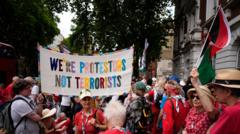
Supreme Court Considers Palestine Action Ban Appeal
The United Kingdom's highest judicial authority has granted Palestine Action's co-founder permission to pursue a legal appeal against the government's decision to proscribe the organization under anti-terrorism legislation. This significant development marks a crucial moment in the ongoing legal battle surrounding the Palestine Action ban, with the Supreme Court now poised to examine the validity of the government's enforcement actions.
Understanding the Palestine Action Ban
The Palestine Action ban was implemented by the government using existing anti-terrorism legislation, classifying the organization as a proscribed entity. This designation severely restricts the group's operational capabilities and exposes members to potential legal consequences. The decision to invoke anti-terrorism laws has been controversial, with supporters of the organization arguing that such classification fundamentally misrepresents the nature of their activism.
The Legal Challenge Unfolds
The co-founder's successful application for permission to appeal demonstrates that the Supreme Court recognizes substantial legal questions merit examination at the highest judicial level. By granting this permission, the court has indicated there are arguable grounds worthy of full judicial consideration. This procedural step is essential before a formal appeal hearing can proceed, as it ensures only cases with genuine legal merit consume the Supreme Court's limited time and resources.
Implications of the Supreme Court Review
The Supreme Court's decision to review the Palestine Action ban carries profound implications for both the organization and broader interpretations of anti-terrorism legislation in the United Kingdom. A favorable outcome could result in the proscription being overturned or significantly modified, potentially reinstating the group's ability to operate without legal restrictions. Conversely, if the government's position is upheld, it would provide legal validation for the current enforcement approach and potentially strengthen the precedent for similar applications of anti-terrorism powers.
Anti-Terrorism Legislation Scrutiny
This case has intensified scrutiny surrounding how anti-terrorism legislation is applied to protest organizations and activist groups. Civil liberties organizations have raised concerns about whether such sweeping powers are appropriately calibrated to distinguish between genuine security threats and lawful political activism. The Supreme Court's examination of the Palestine Action ban will necessarily address these foundational questions about the appropriate scope and application of counter-terrorism measures in democratic societies.
Timeline and Next Steps
While the court has granted permission for the appeal, the formal hearing has not yet been scheduled. The Supreme Court process typically involves detailed written submissions from both the appellant and government representatives, followed by oral arguments before the justices. The court's ultimate judgment will likely establish important legal precedent regarding the interpretation and application of anti-terrorism statutes to political organizations.
Impact on Palestine Action Members
Members and supporters of Palestine Action have expressed relief that the judicial system is providing an opportunity for comprehensive review. The current proscription status has created significant challenges for individuals associated with the organization, restricting their ability to engage in public activism and creating ongoing legal uncertainty. The Supreme Court review represents a potential pathway toward resolution of these pressing issues.
Broader Context of the Dispute
The Palestine Action ban controversy exists within a larger debate about protest rights, government authority, and the appropriate application of emergency powers in peacetime. Advocacy groups have emphasized that democratic societies require robust protections for political expression, even when such expression proves controversial or challenges established government positions. The Supreme Court's forthcoming examination will inevitably touch upon these fundamental constitutional principles.
As the Supreme Court prepares to review the Palestine Action ban, observers from across the political spectrum await the court's decision with considerable interest. The ruling will likely influence how similar applications of anti-terrorism legislation are evaluated in future cases, making this review consequential not only for Palestine Action itself but for the broader framework governing protest and activism in the United Kingdom.