Ecuador's Drug Trade: Police Battle Cocaine Trafficking Routes to Europe
Discover how Ecuador's police combat the cocaine superhighway to Europe. BBC reports on gangs, enforcement efforts, and the battle against drug trafficking.
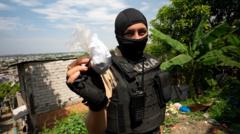
Ecuador's Escalating Battle Against Cocaine Trafficking Networks
Cocaine trafficking from Ecuador has emerged as one of the most pressing security challenges facing law enforcement agencies across South America and Europe. The BBC's investigative reporting reveals how Ecuador's police forces are intensifying their efforts to combat the intricate networks of criminal organizations that exploit the country's geography and infrastructure to supply cocaine markets thousands of miles away. This cocaine trafficking crisis demands comprehensive understanding of the operational strategies, enforcement responses, and international cooperation initiatives driving the fight against organized crime.
Understanding the Cocaine Supply Chain
Ecuador's position along the Pacific coast makes it a critical junction in the global cocaine supply network. Criminal syndicates exploit multiple routes to transport narcotics northward through Central America and across the Atlantic to European markets. The cocaine trafficking routes have evolved significantly, with smugglers employing increasingly sophisticated methods including semi-submersible vessels, commercial shipping containers, and air freight mechanisms. These operations generate enormous profits that fund violent gang activities and territorial disputes within Ecuador itself.
The Role of Organized Crime Groups
Powerful drug cartels control significant portions of Ecuador's cocaine trade, establishing underground laboratories and clandestine processing facilities throughout the country. These organizations employ thousands of individuals across production, distribution, and security functions. Gang violence has intensified dramatically as different criminal factions compete for territorial control and supply chain dominance. The ruthlessness of these groups extends to attacks on police officers, prison riots, and civilian violence in urban centers.
Police Operations and Enforcement Strategy
Ecuador's National Police have deployed specialized units dedicated to disrupting cocaine trafficking operations at every stage. Officers conduct dangerous undercover investigations, execute raids on suspected production facilities, and monitor port activities for shipment attempts. The BBC's patrol coverage documents the daily challenges officers face while pursuing criminals who possess superior firepower and resources. Police achievements include substantial cocaine seizures, arrests of high-level traffickers, and dismantling of distribution networks operating within Ecuador's cities.
Tactical Approaches and Challenges
Law enforcement agencies employ intelligence-led policing, international intelligence sharing, and community informant networks to identify smuggling operations. However, officers confront severe limitations including insufficient equipment, inadequate staffing, and corruption within some departmental ranks. The dangerous nature of narcotics enforcement creates constant physical risks, with officers regularly engaging armed criminal elements. Resource constraints significantly hamper the police's capacity to sustain comprehensive operations across Ecuador's diverse geography, from urban areas to remote jungle regions where clandestine laboratories operate.
International Cooperation Against Drug Networks
Addressing cocaine trafficking requires coordinated efforts between Ecuador and international partners including the United States, European authorities, and neighboring South American nations. Joint task forces share intelligence regarding trafficking methods, smuggler identities, and distribution networks. International maritime patrols intercept shipments at sea, while customs agencies inspect cargo at ports and airports. These collaborative initiatives have achieved significant results, though smugglers continuously adapt their tactics to circumvent enforcement actions.
The European Connection
European markets represent the ultimate destination for much Ecuadorian cocaine, with criminal organizations establishing distribution networks across major European cities. The profitability of European markets drives competition among South American cartels and fuels the violence devastating Ecuador's communities. European law enforcement agencies increasingly cooperate with Ecuador's police through intelligence sharing, extradition agreements, and joint investigations targeting transnational criminal enterprises.
The Human and Social Cost
Cocaine trafficking creates profound consequences extending far beyond law enforcement encounters. Gang violence related to drug trade competition has generated thousands of deaths, displaced families, and destabilized entire communities. Prisons have become battlegrounds where rival gangs fight for control, resulting in mass casualties during riots. Economic resources that could address poverty and education instead fund criminal organizations and militarized response efforts.
Future Prospects for Ecuador's Drug War
Sustained commitment to police modernization, international cooperation, and alternative economic development represents the foundation for addressing Ecuador's cocaine trafficking crisis. Investment in officer training, equipment upgrades, and intelligence capabilities will strengthen enforcement capacity. International partnerships must balance enforcement actions with addressing underlying factors driving drug production, including poverty and limited legitimate economic opportunities in rural regions.
The BBC's documentation of Ecuador's police response illustrates both the determination of law enforcement officials and the formidable challenges they confront while battling sophisticated criminal networks. Resolving Ecuador's cocaine trafficking problem requires comprehensive strategies addressing production, trafficking routes, and drug market demand simultaneously across multiple nations and continents.